The geography and history of South America.
The longest continuous mountain chain in
the world is the Andes 4,500 miles long.
It is snowcapped along the entire length and mostly impassable, therefore
it cuts off main regions in the west of the continent from the East. The highest point is Aconcagua Mountain
(22,843 ft) in the Mendoza
Province Argentina and the nearest capital city is Mendoza.
Water from this range tumbles down to supply
water from the mountain range as a source of hydroelectric power for the Andean
nations of Chile, Peru and Ecuador, Colombia and Venezuela. The eastern side of Latin America is dominated
by Brazil and the Amazon River, the second longest in the world after the Nile.
One of the few things the counties of South
America have in common is the language based on Latin. Spanish is the language of almost of all of them
but in Brazil it is Portuguese and French Guiana in Guiana.
In the 19th Century many newly
independent countries broke apart, either through civil conflict, or cross-border
wars but at the end of the century the borders of most states were mostly set.
The richest nations were Brazil, Chile and Argentina. They set off on a navel arms race, which held
back development of all three. There is a bitter relationship between Bolivia
and Chile dating back to 1879 to the Wars of the Pacific in which Bolivia lost
a large chunk of its territory including 250 miles of the coastline and as a
result is now landlocked. It has never recovered and remains the poorest of the
Latin American countries. This has
exacerbated the divide between the lowland and indigenous peoples of the
highlands. Time has not healed the wounds between the countries. Despite
Bolivia has the third largest reserves of natural gas in South America it will
not sell any to Chile which is need of a reliable supplier. Two Bolivian
presidents who toyed with the idea were thrown out of office and the current
president has a “gas to Chile” policy consisting of gas for coastline deal, which
is dismissed by Chile, despite its need for energy. National pride and
geographical need on both sides trump diplomatic compromise.
The Nobel Prize for literature was won by Chilean born Pablo Neruda in 1971. He adopted this pen name in memory of the Czechoslovak poet Jan Neruda (1834-1891). His real name is Neftalí Ricardo Reyes Basalt. He was born in Parral a few hours south of Santiago. I love his poetic work "The Captain's Verses" that communicates passion and gentleness in an apotheosis of sexual love.
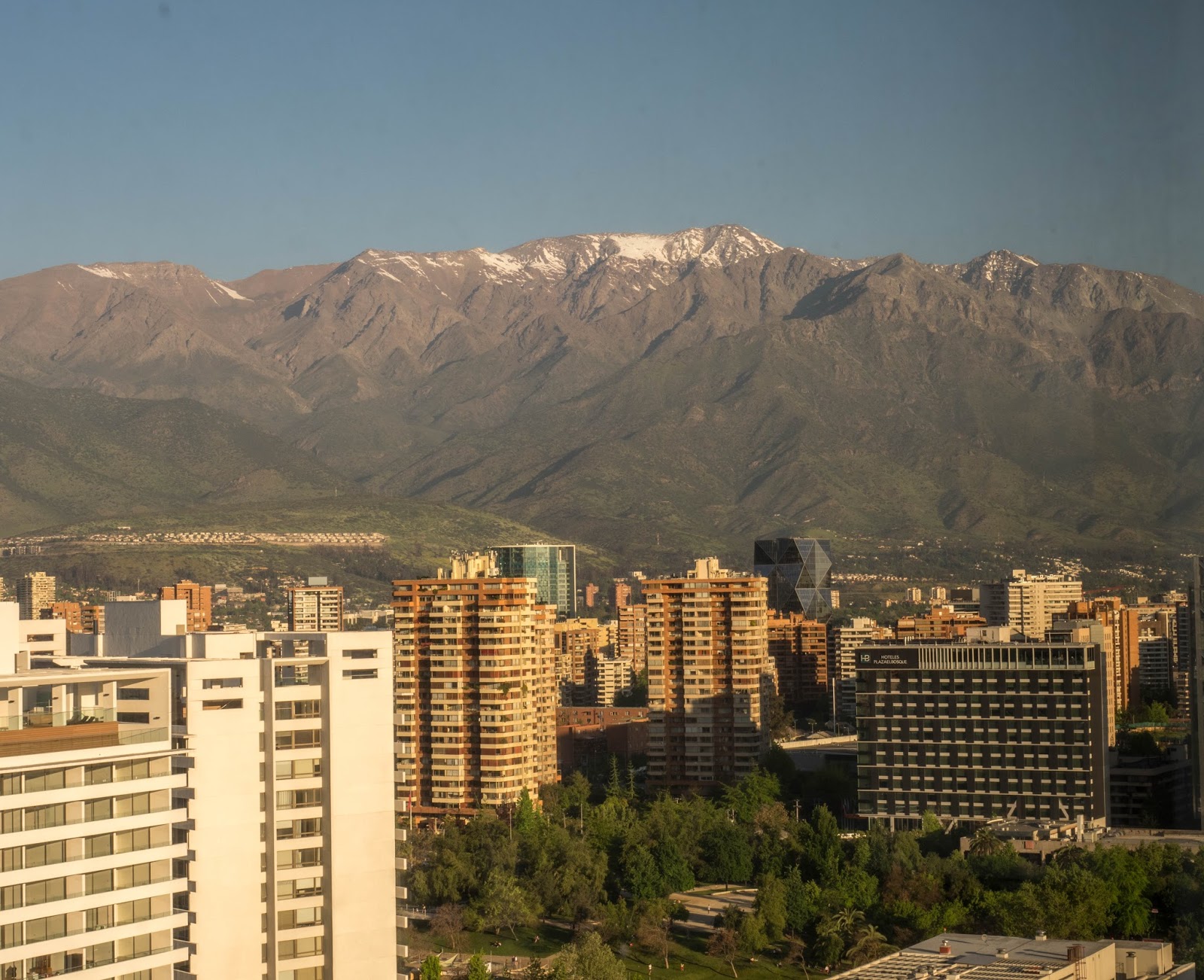
My base for two night was this tall hotel that had a view towards the Andes. The only issue was all the windows were firmly fitted and there were reflections on the window that did not add to photograph. Hence my view from the window looks pleated! I had noticed men with harnesses and window cleaning gear earlier on but although I thought about a clear view I thought it best to leave it to them.....